

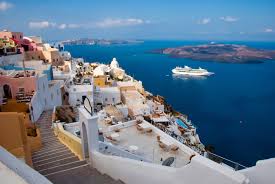
Greece has implemented a new tourist tax targeting cruise passengers in a bid to manage over-tourism, especially in its most visited islands like Santorini and Mykonos. Starting July 2025, cruise ships docking at these popular destinations must pay EUR 20 (approx. USD 23.62) per passenger. For smaller islands, the tax is set at EUR 5 per passenger. The tax will be enforced annually during peak season—from June 1 to September 30—and is expected to generate up to EUR 50 million per year.
The move is part of a broader European trend to address the growing strain tourism places on infrastructure and local communities. Similar steps have already been taken in cities like Venice, which charges day visitors, and Spanish regions like Ibiza and Barcelona, which are cracking down on overtourism. Greece plans to use the funds collected to improve island infrastructure, particularly the ports, which struggle to handle multiple large ships daily.
Cruise tourism is booming in Greece. Passenger numbers rose by 13.2% last year to 7.9 million. Santorini and Mykonos each welcomed over 1.3 million visitors in 2024, despite efforts to cap daily cruise arrivals. Yet, residents continue to raise concerns over pollution, water shortages, waste management, and traffic congestion caused by cruise tourism. Many also argue that cruise passengers spend less time and money compared to traditional overnight tourists.
However, not all stakeholders support the tax. Critics, including local port authorities, argue that it creates unfair competition between taxed and non-taxed islands. The cruise industry, meanwhile, defends its role in Greece’s economy, highlighting the EUR 2 billion in annual revenue it generates. With 40.7 million tourists visiting Greece in 2024—a 12.8% increase from the previous year—tensions continue to rise between economic opportunity and sustainability.