

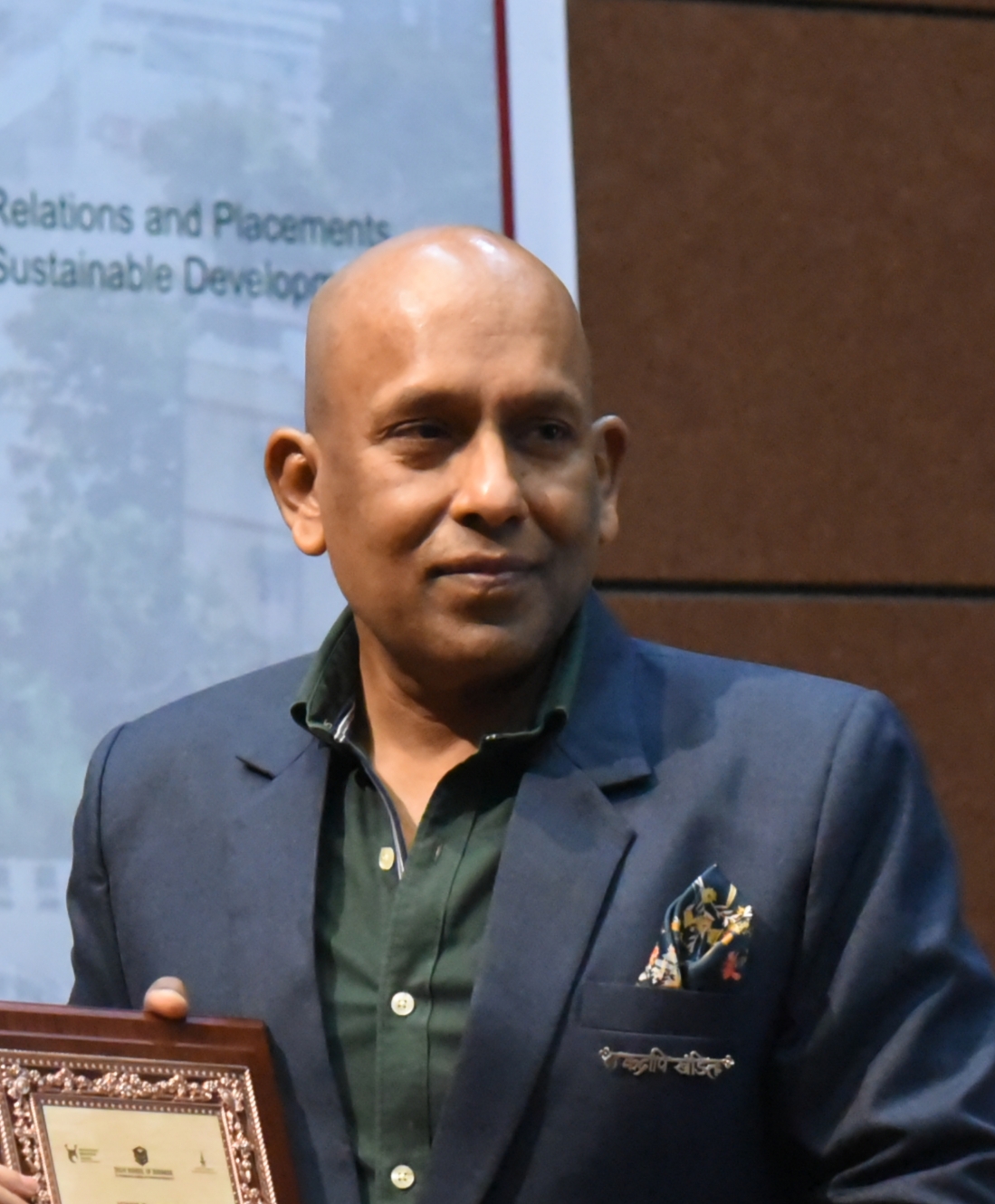
Prof Nimit Chowdhary, Vice Chancellor, Rajasthan Technical University, Kota; and, Professor of Tourism, Jamia Millia Islamia, New Delhi
On a chilly winter night near Jaisalmer, tourists sat around a crackling fire as the haunting sound of the kamaicha drifted across the moonlit dunes. A German traveller looked at the endless desert and whispered, “This place feels timeless.”
Nearby stood Raju, a camel owner from a small village. He smiled politely, though his mind wandered elsewhere. A decade earlier, tourism had arrived like a grand celebration. Roads were built, desert camps glittered with lanterns, and buses packed with visitors rolled in every evening. Villagers believed prosperity had finally knocked on their doors.
But the desert slowly changed. Water became scarce. Plastic littered the dunes. Large outside companies-built luxury camps while local craftsmen struggled to survive against cheap factory-made souvenirs. Tourism had brought crowds, but not always prosperity.
As the folk music echoed into the cold desert night, Raju wondered: was tourism about attracting visitors, or about building a better future for the people who called the desert home?
Tourism is not simply about selling places
Whenever the economy begins to stumble, tourism suddenly becomes the shining hero in every discussion. Leaders promise grand campaigns, glossy advertisements, and record-breaking visitor numbers. Screens fill with dazzling images of beaches glowing at sunset, forts rising from deserts, misty mountains, colourful festivals, and tourists smiling for selfies.
But tourism is not merely about selling beautiful pictures. It is about creating lasting value. A destination truly succeeds when tourism improves everyday life for local people through jobs, thriving businesses, better roads, cleaner cities, stronger culture, and fresh investment.
Too often, destinations advertise themselves before preparing themselves. It is like inviting hundreds of guests to a wedding without arranging water, transport, toilets, or food. Visitors may come once, but they rarely return happily. Soon traffic chokes the roads, rivers grow polluted, waste piles up, and local residents begin seeing tourists not as guests, but as burdens.
The future will belong to destinations that focus less on noise and more on design.
Where the real value flows
The real success of tourism is not measured by how many tourists arrive at a destination, but by where their money finally flows. When a traveller visits Udaipur, stays in a family-run homestay, eats dal baati at a local restaurant, buys handmade miniature paintings, rides with a local driver, and watches a folk dance under the stars, one journey supports dozens of livelihoods at once. Tourism then becomes an economic river flowing through the entire community.
But when most profits are captured by a few large outside companies, local people receive only crumbs from the feast. That is why tourism strategy matters. Tourism is not just about hotels and sightseeing. It is deeply linked with transport, handicrafts, farming, culture, education, and city planning.
Even Kota, famous for coaching institutes, already functions like a tourism ecosystem. Thousands of students arrive every year carrying suitcases, ambitions, and family savings. With cultural festivals, museums, youth events, and riverfront activities, the city could transform educational travel into a vibrant economic force. After all, tourism value does not always arrive with cameras; sometimes it arrives carrying books and dreams.
Designing destinations for the future
The most successful tourism destinations of the future may not be the loudest or the most advertised. They will be the most intelligently designed. Tourism works like a grand orchestra where roads, airports, hotels, technology, local businesses, safety systems, and environmental protection must all play in harmony. If one instrument goes badly out of tune, the entire performance suffers.
Across India, many hill stations already struggle with choking traffic, overflowing garbage, shrinking water supplies, and overcrowded streets during holiday seasons. Tourists return exhausted, while local residents begin seeing tourism as a burden instead of an opportunity. More visitors do not automatically create better tourism.
Smart tourism creates balance. It spreads visitors across lesser-known destinations, supports local entrepreneurs, trains young people, improves public transport, and protects culture and nature before they are damaged forever. Tourism should make destinations stronger, not weaker.
As the desert fire faded near Jaisalmer, Raju quietly realised a powerful truth: tourism succeeds not when places become crowded, but when places become stronger.
“Tourism succeeds not when places become crowded, but when places become stronger.”
About the author: Dr. Nimit Chowdhary is a distinguished Professor of Tourism at Jamia Millia Islamia, New Delhi, and currently serves as the Vice Chancellor of Rajasthan Technical University, Kota. With over 31 years of academic experience—more than two decades as a professor—he has taught and inspired students across India, Mexico, and China. An accomplished scholar, Prof. Chowdhary has served as visiting faculty at the University of Gotland (Sweden), University of Girona (Spain), IIM Sirmaur, IIQM, and EDII. Renowned for his prolific academic contributions, he has authored 30 books and over 350 research papers, articles, and chapters, and successfully guided 23 PhD scholars. A global traveller who has explored more than 40 countries, Prof. Chowdhary is widely recognized as an authority in the field of tourism and hospitality education.