

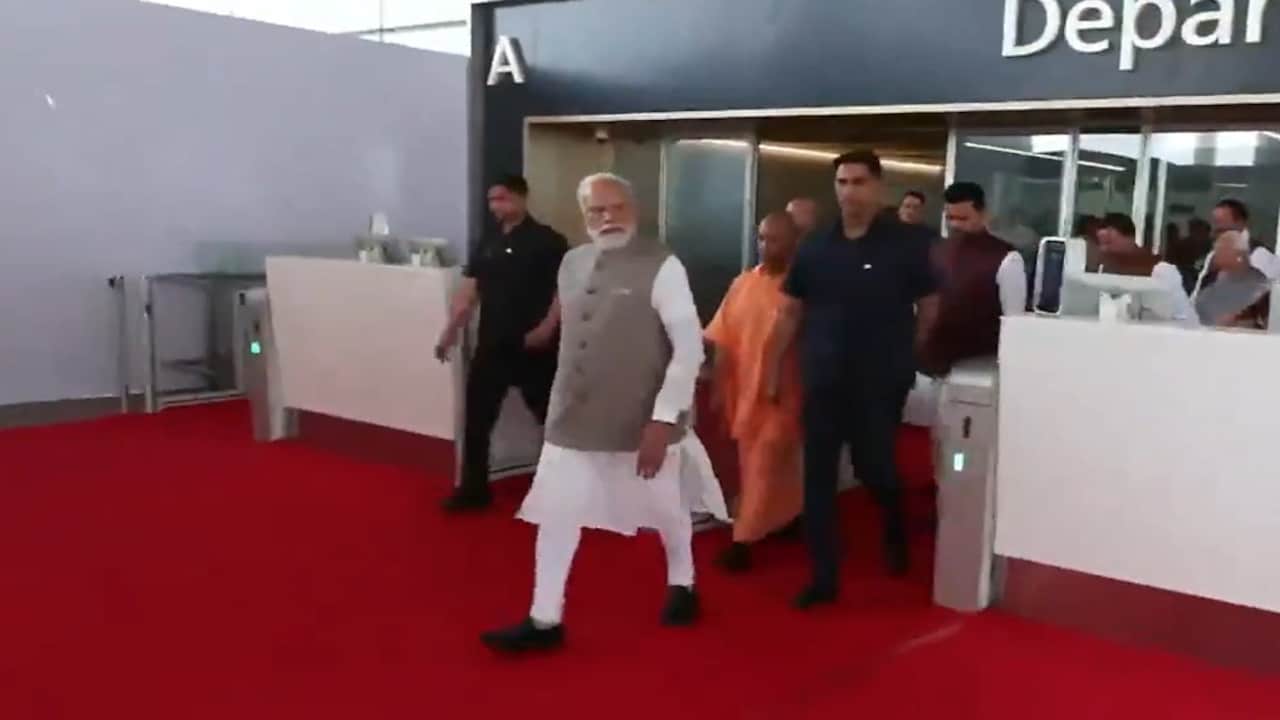
Prime Minister Narendra Modi inaugurated Phase 1 of the Noida International Airport in Jewar, marking a significant milestone in India’s aviation and infrastructure development. The event was attended by key leaders including Yogi Adityanath and Civil Aviation Minister Kinjarapu Ram Mohan Naidu, under tight security arrangements.
The first phase of the airport has been developed at an estimated cost of INR 11,200 crore. It is designed as a multi-modal transport hub with seamless connectivity through road, rail, metro, and regional transport systems. This integrated approach aims to enhance passenger convenience and strengthen logistics efficiency in the region.
In terms of capacity, the airport is expected to handle around 12 million passengers annually in its initial phase, with plans to scale up to 70 million passengers in the future. It also includes a cargo hub with an initial capacity of over 2.5 lakh metric tonnes per year, expandable to nearly 18 lakh metric tonnes, boosting trade and logistics.
Speaking at the event, the Prime Minister highlighted the airport’s potential to transform West Uttar Pradesh. Cities such as Agra, Mathura, Aligarh, and Meerut are expected to benefit through improved connectivity, job creation, and business opportunities. The project is seen as a catalyst for economic growth in the region.
Modi also linked the project to the broader vision of “Viksit UP, Viksit Bharat,” emphasising infrastructure as a key driver of development. He pointed out that Uttar Pradesh now has the highest number of international airports in India, strengthening its position in the country’s aviation network.
The inauguration marks the beginning of a new phase in regional development. With global connectivity, improved logistics, and increased investment opportunities, the Noida International Airport is expected to play a crucial role in shaping the future of both the state and the nation.