

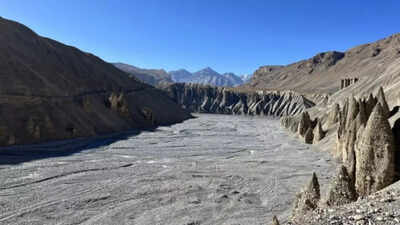
UNESCO has officially recognised India’s Cold Desert Biosphere Reserve as part of its World Network of Biosphere Reserves (WNBR) during the 5th World Congress of Biosphere Reserves in Hangzhou, China, on 27 September 2025. With this addition, India now has 13 biosphere reserves under UNESCO, joining a global network of 785 sites. This recognition highlights India’s continued commitment to environmental conservation and sustainable development at an international level, showcasing its diverse and unique ecosystems to the world.
Spanning 7,770 square kilometres at altitudes ranging from 3,300 to 6,600 metres, the Cold Desert Biosphere Reserve includes windswept plateaus, glacial valleys, alpine lakes, and rugged high-altitude deserts. This is India’s first high-altitude cold desert biosphere reserve and among the coldest and driest ecosystems in the WNBR. The reserve covers Pin Valley National Park, Chandratal, Sarchu, and Kibber Wildlife Sanctuary, offering a sanctuary for both biodiversity and fragile alpine landscapes that require careful preservation.
The reserve harbours 732 species of vascular plants, including 30 endemic and 157 near-endemic species of the Indian Himalayas. It is also home to iconic fauna such as the Snow Leopard, Himalayan Ibex, Blue Sheep, Himalayan Wolf, Himalayan Snowcock, and Golden Eagle. These species reflect the biological richness of the region, making it an invaluable natural treasure not only for India but for the entire global conservation community seeking to protect rare and endangered wildlife.
Approximately 12,000 inhabitants live in scattered villages within the trans-Himalayan region, practicing traditional pastoralism, yak and goat herding, barley and pea farming, and Tibetan herbal medicine. These practices are sustained through Buddhist monastic traditions and local community councils, which regulate the use of fragile alpine resources. The designation reinforces the importance of preserving both the ecological and cultural heritage of communities that have coexisted with nature for centuries.
Tim Curtis, Director and Representative of UNESCO’s Regional Office for South Asia, described the Cold Desert Biosphere Reserve as a “powerful example of how fragile ecosystems can be protected while supporting the communities that depend on them.” He highlighted that the WNBR sites are not just protected areas but active “learning places for sustainable development,” where science, culture, and community-led stewardship combine to foster harmony between people and the planet.
The announcement coincides with the 50th anniversary of UNESCO’s Man and the Biosphere (MAB) Programme, which seeks to balance biodiversity conservation with sustainable human development. Biosphere reserves act as testing grounds for innovative approaches to managing social and ecological systems, conflict prevention, and biodiversity protection. By integrating conservation, sustainable economic development, and research support, the Cold Desert Biosphere Reserve stands as a model for local solutions to global environmental challenges.