

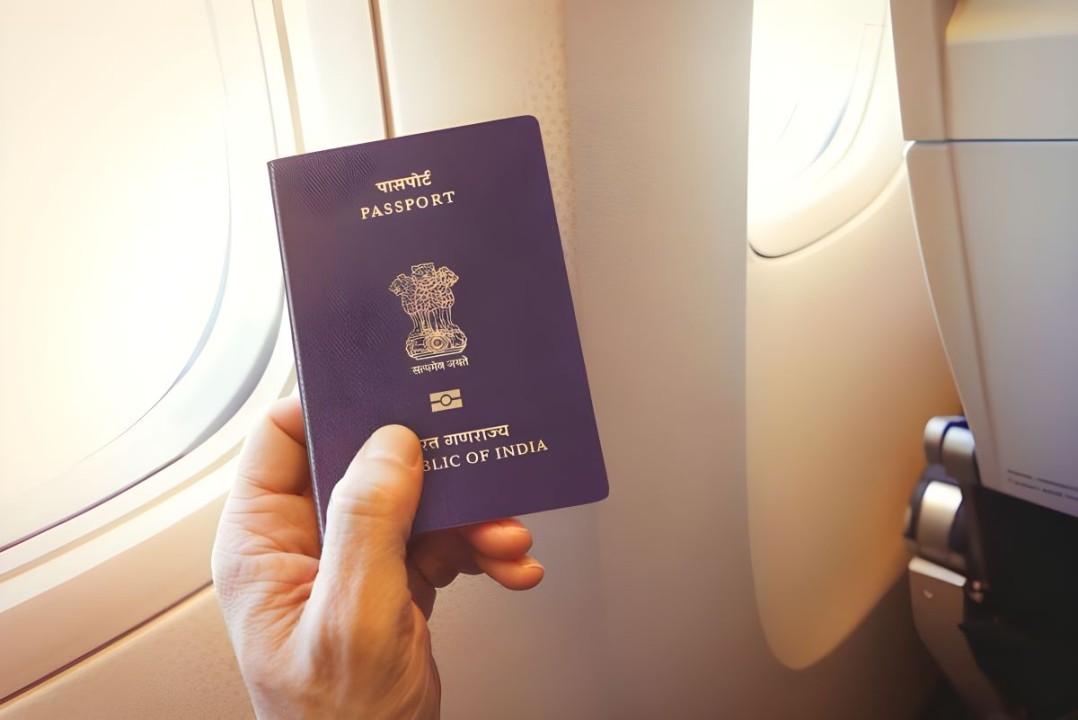
In a significant leap toward modernising its travel documentation system, India has commenced the phased rollout of e-Passports, integrating advanced biometric security with digital convenience. Equipped with embedded Radio Frequency Identification (RFID) chips and antennas, these next-generation passports promise enhanced protection against forgery while streamlining international travel for Indian citizens.
Launched under the Passport Seva Program (PSP) Version 2.0, the initiative began as a pilot on April 1, 2024, in 12 selected cities. These include major urban centers such as Chennai, Jaipur, Hyderabad, Nagpur, Amritsar, and Goa, along with regional hubs like Bhubaneswar, Jammu, Shimla, Raipur, Surat, and Ranchi. The Regional Passport Offices (RPOs) in these cities are now issuing e-Passports as part of the country’s broader digital governance and citizen service transformation strategy.
What Sets e-Passports Apart?
Unlike traditional passports, e-Passports combine physical documentation with an electronic chip that stores encrypted biometric and demographic data. This dual-layer data protection allows authorities to verify the identity of the passport holder electronically while retaining the familiar printed format.
The RFID chip securely holds critical personal details, including the passport holder’s photograph, fingerprints, and iris scan, making it far more difficult to counterfeit. By aligning with International Civil Aviation Organization (ICAO) standards, India’s e-Passports are designed for global interoperability, enabling seamless integration with automated border control systems and e-gates used at airports worldwide.
Tamil Nadu Among Early Adopters
Tamil Nadu has emerged as a front-runner in the nationwide rollout, with the Chennai Regional Passport Office beginning e-Passport issuance on March 3, 2025. As of March 22, the state had already issued 20,729 e-Passports, reflecting strong early adoption and operational readiness.
Officials noted that both infrastructure and staff training have been prioritised in these pilot cities to ensure smooth implementation. “The objective is to gradually scale up across the country, with upgrades to passport office systems and immigration facilities well underway,” said a Ministry of External Affairs spokesperson.
Enhancing the Travel Experience
Beyond security, one of the biggest advantages of e-Passports lies in enhancing the traveler experience. With embedded digital credentials, passengers will benefit from faster immigration procedures, including shorter queues and reduced document handling at border checkpoints.
The RFID-enabled technology allows for automated identity verification, reducing reliance on manual checks and minimizing human error. In the long term, this will enable India to integrate more effectively with global smart travel systems, positioning Indian passports on par with those of advanced economies.
Nationwide Rollout Through 2025
The implementation of e-Passports is part of India’s broader goal to digitize essential public services, enhance citizen convenience, and meet evolving global standards in identity verification. The Ministry of External Affairs has confirmed that the full-scale rollout will continue throughout 2025, with additional passport offices being upgraded in phases.
Citizens applying for new or renewed passports in pilot cities can now opt for the e-Passport, while expansion plans will gradually cover Tier-II and III cities.