

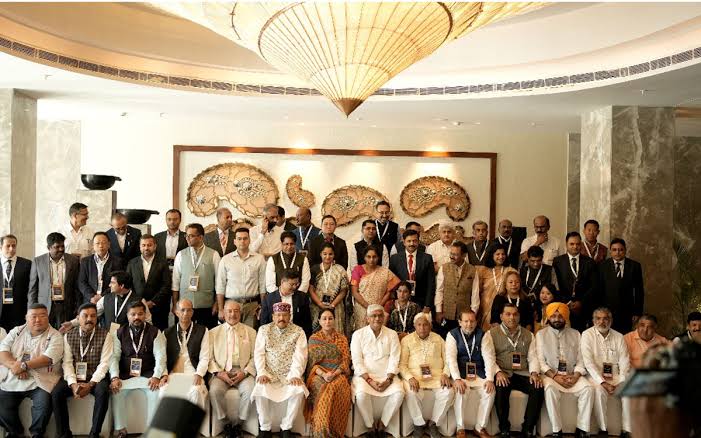
At the Tourism Ministers’ Meet held in Rajasthan this week, Goa presented two ambitious projects designed to redefine its tourism landscape—a state-of-the-art 20,000-seat performance arena in Mandrem and a grand statue and museum dedicated to Lord Parshuram. These projects aim to enhance visitor experiences, create employment opportunities, and position Goa as a global tourism hub beyond its traditional beach image. The event, held over two days, brought together tourism ministers and senior officials from all Indian states and Union Territories to discuss the future of tourism in the country.
The proposed 20,000-seat arena in Mandrem will serve as a multi-functional venue for international concerts, conventions, and large-scale cultural events. It represents a major step in diversifying Goa’s tourism offerings by tapping into the global entertainment and MICE (Meetings, Incentives, Conferences, and Exhibitions) segments. Simultaneously, the Lord Parshuram statue and museum, alongside the lifescape project in Canacona, will celebrate Goa’s mythological roots through storytelling zones, scenic viewpoints, and interactive exhibits, transforming the area into a vibrant cultural and spiritual landmark.
According to Goa Tourism officials, these initiatives are part of the broader “Goa Beyond Beaches” vision, which seeks to reposition the state as a holistic destination that combines spirituality, culture, and natural beauty. For years, the government has worked to expand its appeal beyond sun and sand, promoting hinterland tourism and sustainable development. The mythological connection of Lord Parshuram—believed to have created Goa by parting the Arabian Sea with his arrow—will serve as a symbolic foundation for this cultural transformation.
During the two-day conference, Goa outlined its strategic plan built on sustainable and community-led growth. The presentation focused on seven key pillars: eco and nature-based tourism, heritage and culture, MICE tourism, adventure and leisure experiences, Goan backwaters, and spiritual, wellness, and medical tourism. The approach integrates infrastructure upgrades, improved connectivity, technology-driven visitor experiences, and strong cultural preservation, ensuring that Goa’s tourism growth remains both inclusive and future-ready.
Tourism Minister Rohan Khaunte emphasised that Goa’s tourism strategy is rooted in regenerative practices that prioritise environmental conservation and community well-being. He stated that the new developments in Pernem and Canacona would “redefine Goa’s tourism landscape” while maintaining balance between growth and sustainability. The Minister added that Goa’s philosophy of “Atithi Devo Bhava” (Guest is God) continues to guide its commitment to offering safe, memorable, and responsible tourism experiences.
Kedar Naik, Director of Tourism, Government of Goa, echoed this sentiment, highlighting the state’s focus on strengthening its global standing through innovation, technology, and inclusivity. With these visionary projects, Goa is set to move beyond its image as merely a beach destination and emerge as a dynamic, culturally enriched, and spiritually vibrant global tourism hotspot.