

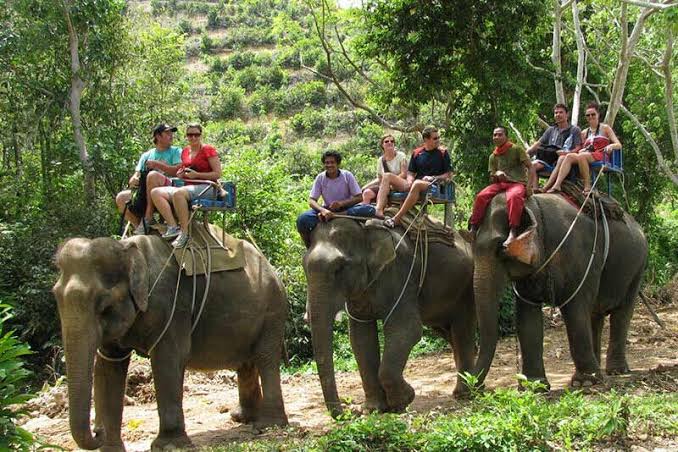
The winter tourist season has brought encouraging news for wildlife lovers as Corbett Tiger Reserve has formally resumed elephant safaris after a gap of nearly six years. Acting on directions from the Chief Wildlife Warden, Dehradun, the park administration has restarted the traditional safari service, adding a new dimension to visitor experiences in one of India’s most iconic tiger reserves.
Corbett Tiger Reserve is globally renowned for its rich biodiversity, Royal Bengal Tigers and immersive jungle safaris. The return of elephant safaris is expected to significantly boost tourist interest, especially among visitors seeking closer, slower-paced encounters with the forest landscape and wildlife. A similar restart of elephant safaris was recently seen at Rajaji National Park in November, signalling a broader revival of the practice in Uttarakhand.
The proposal to resume elephant safaris at Corbett had received approval from the State Wildlife Board in June 2024. Following the completion of necessary departmental procedures and compliance requirements, the service has now been formally launched, just in time for the peak winter tourism period.
Elephant safaris are currently operational in two major zones of the reserve—Dhikala and Bijrani. In the Dhikala zone, two elephants have been deployed across two designated routes, offering tourists scenic views of the Ramganga River, dense sal forests, open grasslands and diverse wildlife habitats during both morning and evening shifts.
In the Bijrani zone, one elephant operates on two routes, with each safari lasting around two hours. The experience is designed to give visitors an intimate perspective of the forest ecosystem, allowing quiet observation of flora and fauna that may not always be visible during vehicle safaris.
According to Park Warden Binder Pal Singh, tickets for elephant safaris are available on a first-come, first-served basis at the park reception centre. The fee has been fixed at ₹1,000 per person for Indian tourists and ₹3,000 for foreign visitors, with up to five persons allowed per elephant. Children below five years of age are exempt from the fee, though the decision has also reignited debate among conservationists over animal welfare concerns.