

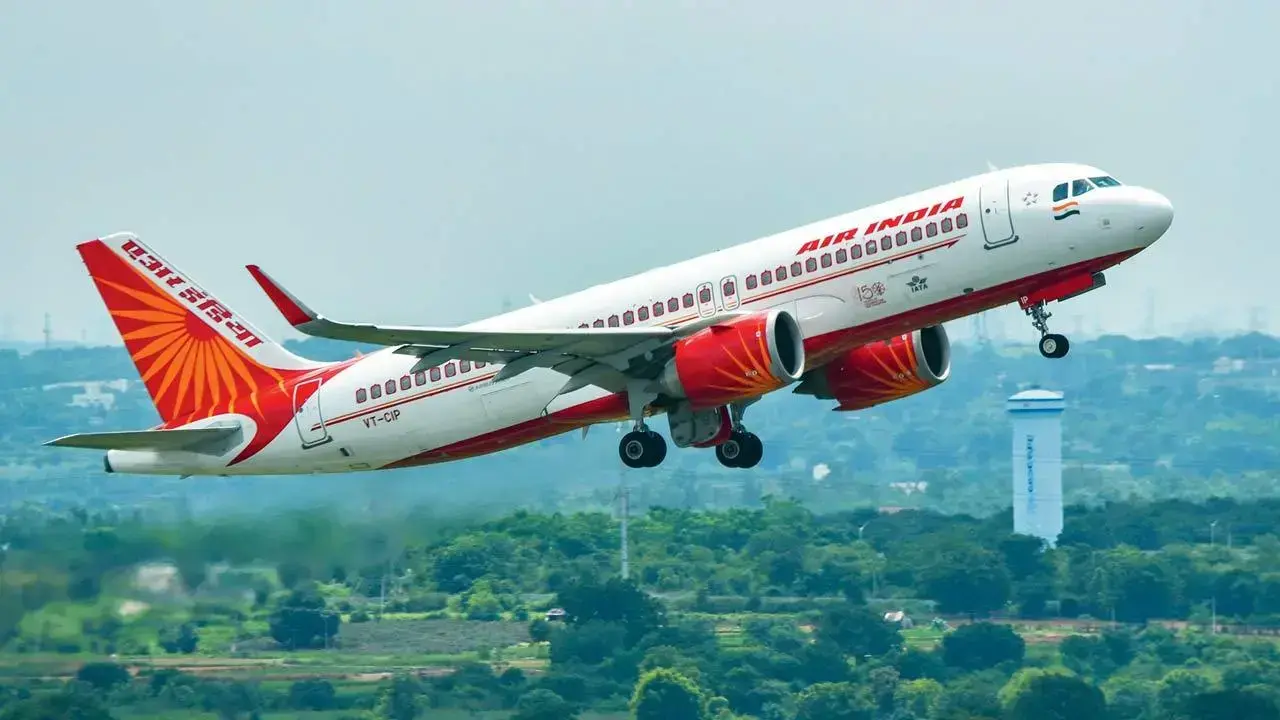
Air India has revised its fuel surcharge for both domestic and international routes following a sharp rise in global jet fuel prices triggered by the ongoing Iran war. The new charges will come into effect from April 8, 2026, while select long-haul routes will see changes from April 10.
For domestic flights, the airline has shifted to a distance-based surcharge system instead of a flat fee. Shorter routes (0–500 km) will attract a lower surcharge, while longer routes above 2000 km will see the highest charges. This approach aligns costs more closely with fuel consumption.
The revision follows a calibrated policy by the Ministry of Petroleum & Natural Gas and the Ministry of Civil Aviation, which capped the increase in domestic Aviation Turbine Fuel (ATF) prices at 25%. This has helped limit the burden on domestic travellers to some extent.
However, international routes have witnessed a much steeper hike, as ATF prices globally remain uncapped. Regions like Europe, North America, and Australia now face significantly higher surcharges, reflecting the surge in long-haul fuel costs.
According to the International Air Transport Association, global jet fuel prices nearly doubled within a month, rising from around USD 99 to over USD 195 per barrel. This dramatic increase has become a major cost pressure for airlines worldwide.
Despite the hike, Air India stated that the surcharge does not fully offset the rising fuel expenses, and the airline continues to absorb part of the cost. Passengers booking tickets after the effective dates may see higher fares, while existing bookings remain unaffected unless modified.