

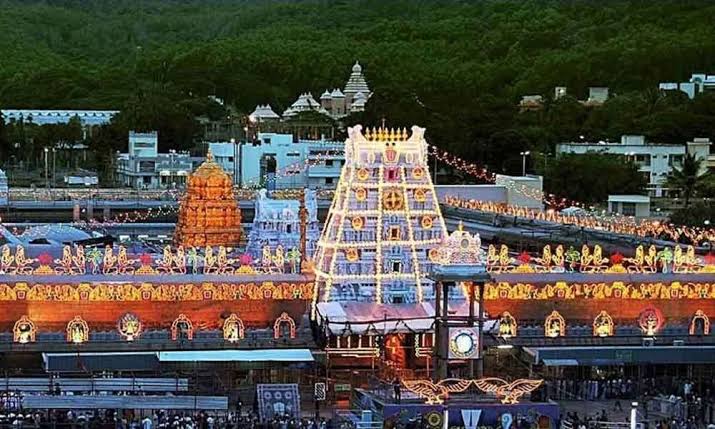
India’s pilgrimage travel habits are undergoing a significant transformation, with devotees increasingly opting for multiple short spiritual getaways throughout the year instead of relying on a single annual religious trip. According to a new analysis by Fresh Bus, India’s first electric intercity bus service, this shift is emerging as a key driver of demand across some of South India’s busiest intercity travel corridors.
The analysis found that passenger volumes on the Hyderabad–Vijayawada route grew by 13.1% between April-May 2024 and April-May 2025, while the Bengaluru–Tirupati corridor witnessed a 9.7% increase during the same period. Together, these two routes carried more than 60,000 passengers in the two-month, underscoring the growing role of spiritual tourism on regional mobility patterns.
Drawing on ticket booking data from April 2024 to May 2026 across its user base of over 6 lakh passengers, the findings indicate that pilgrimage routes are among the fastest-growing segments within South India’s intercity travel ecosystem. The growth is being driven by repeat devotees, women travellers, senior citizens and passengers from Tier-2 and Tier-3 cities, reflecting how spiritual travel is becoming increasingly accessible and integrated into everyday lifestyles.
One of the strongest indicators of this shift is the growing popularity of weekend pilgrimages. Nearly 46% of all bookings on the Bengaluru–Tirupati corridor occur between Friday and Sunday, despite weekends accounting for only three days of the week. The route’s monthly passenger run-rate has nearly doubled from approximately 6,000 tickets in April 2024 to more than 11,700 tickets by March 2026, reflecting the growing popularity of short-duration spiritual trips.
Similar demand across the Chennai–Tirupati and Vijayawada–Tirupati corridors further highlights the growing preference for convenient spiritual getaways. Collectively, seat capacity across these Tirupati-linked routes is projected to grow from nearly 2 lakh seats in 2024 to over 5.5 lakh seats by 2026, showing the rapid growth of organised pilgrimage travel. The trend suggests that travellers are increasingly choosing short-duration spiritual breaks that fit conveniently around work and family commitments.
Booking patterns further reinforce that while 85.4% of bookings continue to be made within 24 hours of departure, planned bookings made between three and fourteen days in advance have grown nearly fourfold, increasing from 1.4% in FY24 to 5.4% in FY26. This trend suggests that pilgrimage travel is becoming increasingly accessible, spontaneous and integrated into routine travel habits.
The analysis also highlights the growing contribution of emerging markets to South India’s spiritual travel economy. Nearly 75% of Tirupati corridor bookings are generated through online travel platforms, signalling rising digital adoption among travellers from Tier-2 and Tier-3 cities.
Fresh Bus added 81,576 first-time passengers on its Tirupati-linked routes in calendar year 2025, compared to 58,079 in 2024, representing a 40% increase in new customer acquisition. Beyond Tirupati, Tiruvannamalai is emerging as another key spiritual travel hub in South India. Driven by year-round pilgrim traffic to the Arunachaleswarar Temple, monthly Girivalam and the Karthigai Deepam festival, the Chennai–Tiruvannamalai and Bengaluru–Tiruvannamalai corridors reflect the growing demand for frequent, faith-driven travel.
Commenting on the findings, Sudhakar Chirra, Founder & CEO, Fresh Bus, said, “Temple tourism is evolving rapidly and becoming a significant contributor to intercity travel demand across South India. We’re seeing devotees travel more frequently throughout the year, often planning short spiritual getaways around weekends rather than waiting for annual religious occasions.
This shift reflects a broader change in traveller behaviour, where convenience, last mile connectivity and comfort are encouraging more people to undertake pilgrimage journeys regularly. As India’s spiritual tourism economy continues to expand, reliable and sustainable mobility solutions will play an increasingly important role in enabling these experiences.”
The findings reflect the broader shift of India’s spiritual tourism economy, which continues to attract travellers seeking accessible and meaningful religious experiences. As pilgrimage journeys become more frequent and integrated into modern lifestyles, the convergence of spiritual tourism and organised intercity mobility is creating new opportunities for both the travel and transportation sectors.