

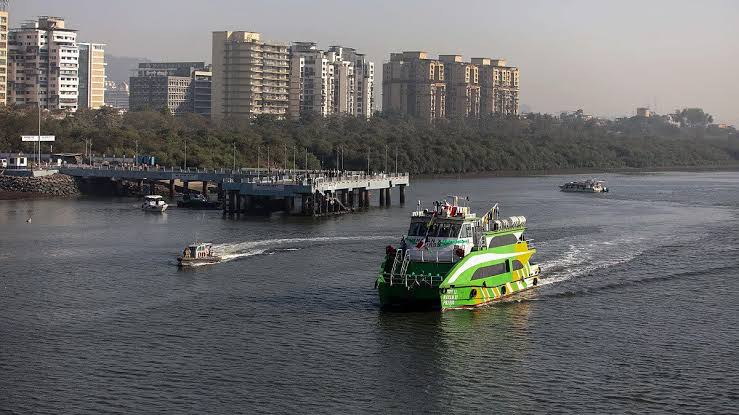
Mumbai’s much-awaited electric water taxi service is set to begin operations on September 22, promising a faster, cleaner, and more comfortable commute between Gateway of India/Mumbai Ferry Wharf and the Jawaharlal Nehru Port Authority (JNPA). The service will replace the existing wooden boats that currently ply the route, cutting travel time from over an hour to less than 40 minutes while offering an eco-friendly alternative.
Bharat Freight Group (BFG), which will manage the operations, has confirmed that two vessels will be introduced in the first phase. One is a hybrid boat powered by solar energy, an electric battery, and a diesel backup, while the other will be fully electric. Both boats can be charged in under an hour, ensuring quick turnaround times for smooth operations. This shift is expected to modernise water-based transport and reduce dependency on fuel-powered vessels.
In the second phase, the fleet will be expanded with four hydrogen-powered boats once the required generators are in place. These vessels will further strengthen Mumbai’s push toward sustainable transportation and align with broader environmental goals. Authorities believe that with this expansion, the water taxi network can become a reliable daily commute option for both office-goers and tourists.
The boats are made of fibre and glass and feature a European design, offering not only improved energy efficiency but also enhanced stability and passenger comfort. This makes them suitable for varied weather conditions and ensures a smoother ride across Mumbai’s busy waterways. The introduction of these vessels marks a significant upgrade over the older fleet in terms of safety and passenger experience.
BFG has also announced plans to expand the service beyond JNPA by adding new routes that will connect South Mumbai to Elephanta Caves, Belapur, Alibaug, and various harbour tourism circuits. This could open up new tourism opportunities and improve connectivity between key coastal destinations in the region.
The launch of Mumbai’s electric water taxi service is being hailed as a milestone in the city’s transport evolution, combining modern technology, environmental responsibility, and improved efficiency. It is expected to ease congestion on roads, offer a scenic travel alternative, and serve as a model for other coastal cities in India looking to modernise their transport infrastructure.