

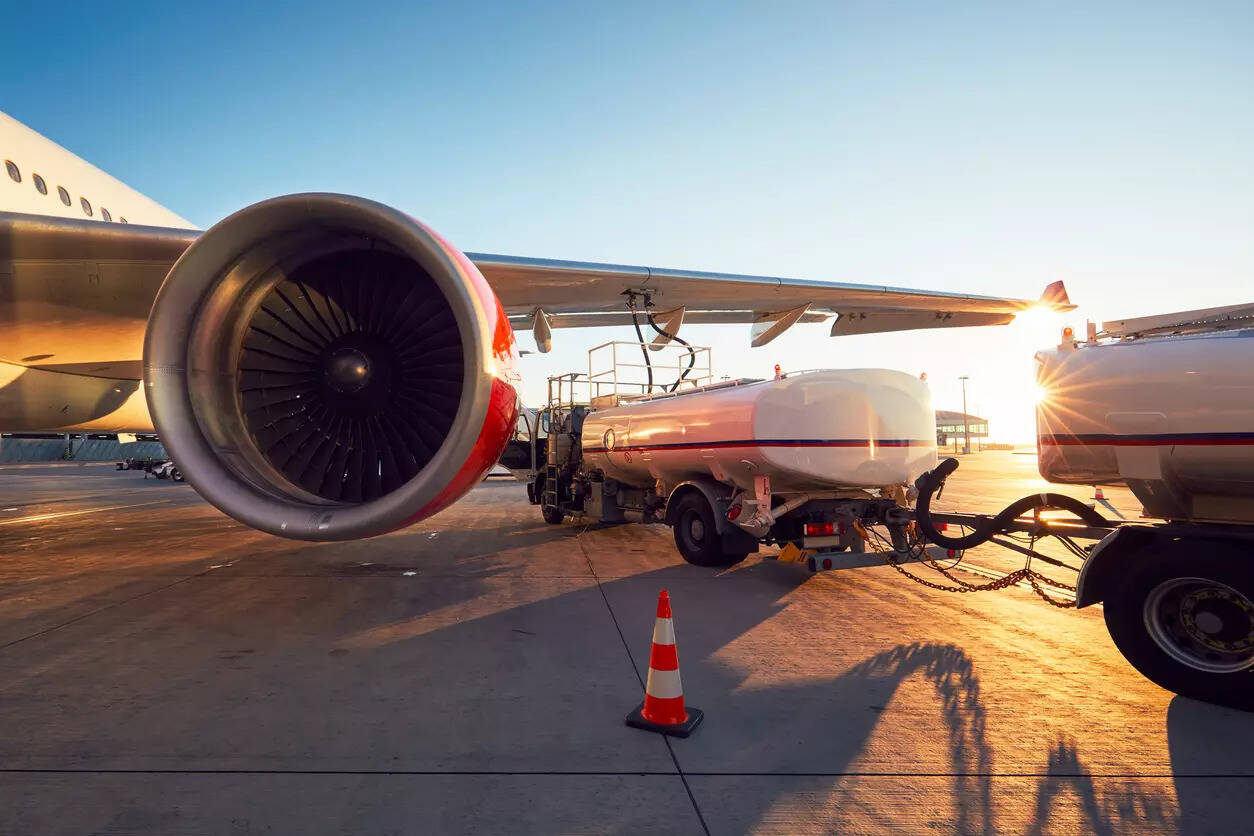
India is accelerating preparations to introduce Sustainable Aviation Fuel (SAF) as global aviation emission rules tighten from January 2027. The move aligns with the Carbon Offsetting and Reduction Scheme for International Aviation (CORSIA) framework set by the International Civil Aviation Organisation, under which member states must gradually reduce carbon emissions from international flights.
Under CORSIA, airlines will begin blending SAF with conventional jet fuel, starting with international routes. Government targets currently indicate a 1% blend in 2027, increasing to 2% in 2028 and 5% by 2030. As a member of ICAO, India is required to comply with the scheme’s mandatory phase from 2027.
Industry representatives say India is well positioned to meet these requirements. The country is now the world’s third-largest biofuel producer, supported by a strong ethanol blending programme. Officials estimate SAF demand could reach 0.72 billion litres by 2030 to meet CORSIA obligations.
Infrastructure readiness is also underway. The Airports Authority of India (AAI) has stated that major airports can handle SAF blends without significant changes, as only fuel composition will differ. Fuel supply at airports is currently managed by companies such as Indian Oil Corporation, Hindustan Petroleum Corporation Limited, and Bharat Petroleum Corporation Limited.
While SAF currently costs two to three times more than conventional jet fuel, officials believe initial blending levels will have minimal impact on ticket prices. Over time, increased domestic production and technological improvements are expected to reduce costs, supporting India’s broader climate commitments in aviation.